
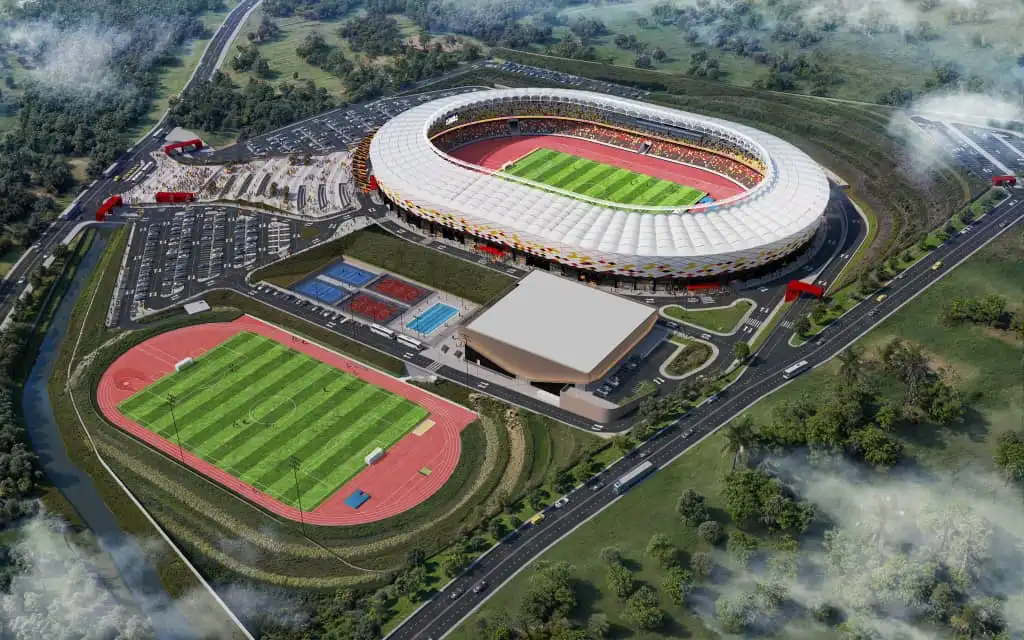
Hoima's strategic positioning in Uganda's emerging oil economy makes this stadium particularly significant, but the economic principles apply across all regions. A properly utilized 20,000-seat stadium hosting 30 events annually generates approximately UGX 2 billion to 3 billion in direct spending through ticket sales, hospitality services, concessions, and parking fees. The 10 concession units and 5 retail spaces create permanent employment while match days activate the informal economy through street vendors, transport services, and accommodation providers.
For Hoima specifically, the stadium complements existing attractions including Murchison Falls National Park, Kibiro Salt Gardens, and Mparo Royal Tombs. International matches and regional tournaments draw visitors who extend their stays to explore these sites, creating a tourism multiplier effect. A tourist who travels to Hoima for a CECAFA tournament match and adds two days to visit Murchison Falls contributes an additional USD 300 to 500 to the local economy through accommodation, meals, park fees, and shopping.
The indoor arena, swimming pool, basketball and volleyball courts enable year-round programming beyond football. In a nation where 77 percent of the population is under 30 years old, accessible sports facilities directly impact talent development, youth employment, and community health outcomes. The facility can host school sports competitions, corporate wellness programs, community leagues, and professional training camps throughout the calendar year, ensuring utilization rates that justify the investment.
UGANDA'S CURRENT STADIUM LANDSCAPE: PROGRESS WITH CRITICAL GAPS
Uganda now operates four internationally certified stadiums meeting CAF and FIFA standards. Mandela National Stadium at Namboole accommodates 40,000 spectators and serves as the primary national venue following significant renovations. Hamz Stadium at Nakivubo holds 35,000 and reopened in 2024 with FIFA-certified artificial turf, now hosting domestic league matches and continental club competitions. St. Mary's Stadium-Kitende seats 20,000 and has served the national team during Namboole's renovation period, featuring high-quality artificial pitch approved by CAF. Hoima City Stadium, the newest addition at 20,000 capacity, brings international-standard infrastructure to the Western Region.
Two major facilities remain under development for AFCON 2027. Akii Bua Stadium in Lira City will accommodate 30,000 spectators and serve as the Northern Region anchor, with construction underway by an Egyptian contractor. Mbale City Stadium in Eastern Uganda is scheduled for reconstruction to international standards as part of the government's AFCON preparations.
This inventory reveals stark geographic concentration. Three of the four operational facilities sit within Kampala's metropolitan area. Only Hoima serves a region beyond the capital, with Lira and Mbale still under construction. This leaves vast territories underserved, including the entire Southwestern region beyond Mbarara, the far Eastern districts past Mbale, and the whole of West Nile.


Comments
0Leave a Comment