
 By Restance Lawrence (Resistance Lawrence) Director, Urban Coalition for Inclusive Development and Nengo Media Grid Published at www.nmgtoday.com
Uganda is losing its forests quietly, steadily, and dangerously. What was once dismissed as an environmental concern has now become a national development and climate crisis, unfolding in real time across hills, wetlands, road reserves, and community landscapes. The loss of forests is no longer an abstract future threat; it is already reshaping rainfall patterns, food security, public health, and economic stability.
Forests are not simply collections of trees. They are living climate infrastructure. They regulate rainfall, cool temperatures, store carbon, stabilize soils, protect water sources, and sustain livelihoods for millions of people. When forests disappear, climate instability follows. Across the world, deforestation and forest fires have emerged as leading drivers of tree cover loss, releasing enormous quantities of carbon dioxide and accelerating global warming. Satellite observations from recent years show millions of hectares of forest burned annually, driven by rising temperatures, prolonged dry seasons, and degraded landscapes that no longer retain moisture.
THE SCALE OF UGANDA'S FOREST COLLAPSE
Uganda is deeply entangled in this global crisis. In 1990, the country had more than 4.3 million hectares of natural forest covering approximately 24 percent of total land area. Today, less than 2 million hectares remain. While tree plantations have expanded in some regions, natural forests, which provide the greatest ecological value through biodiversity, water regulation, and climate stability, continue to decline at alarming rates. Forest cover now stands at under 12 percent of Uganda's total land area, far below the African average of 23 percent and the global average of 31 percent. This decline has not occurred by accident; it has been the result of deliberate land-use choices, weak enforcement, and development pathways that treat forests as expendable resources rather than essential infrastructure.
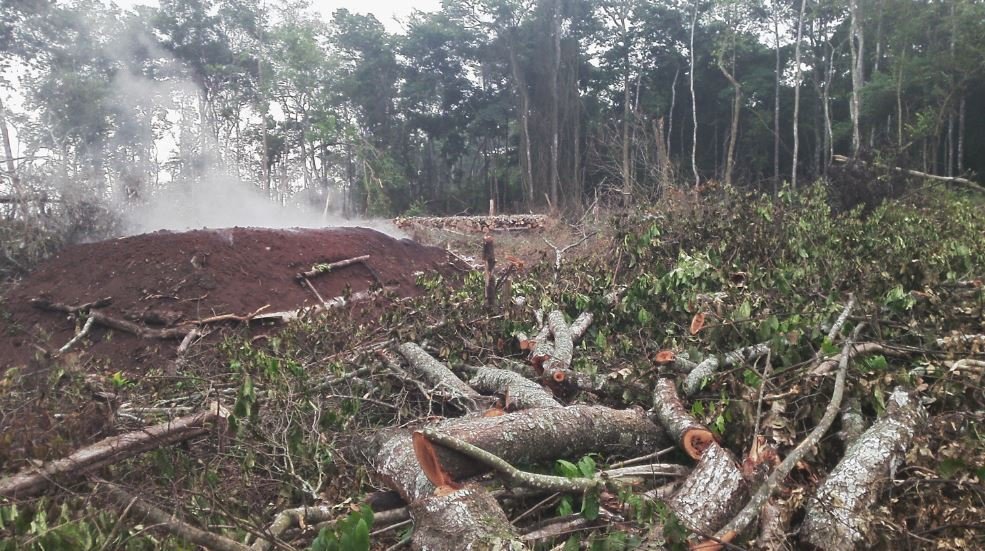
For decades, Uganda has lost forests at rates that should have triggered national emergency responses. Between 1990 and 2015 alone, the country lost an estimated 122,000 hectares of forest each year. To contextualize this figure: 122,000 hectares equals approximately 171,000 football pitches disappearing annually, or roughly 334 hectares vanishing every single day. The drivers are familiar and well-documented: agricultural expansion as populations grow and farmland becomes scarce, charcoal production feeding urban energy demands, illegal timber harvesting for construction and furniture, mining activities clearing vegetation, and infrastructure development that treats trees as obstacles rather than assets.
In more recent years, the destruction has continued unabated. Between 2015 and 2020, Uganda lost approximately 88,000 hectares of forest annually, a slight reduction from earlier decades but still representing catastrophic ecological damage. Each year of forest loss emits an estimated 30 million to 40 million tonnes of carbon dioxide into the atmosphere, equivalent to adding 8 million to 10 million additional cars to Uganda's roads. These emissions strip the landscape of its natural climate defenses while contributing to global warming that intensifies the very conditions, droughts and heat waves, that make remaining forests more vulnerable.
Fire has emerged as an increasingly destructive force in this process. Traditionally used by farmers and pastoralists to clear land, manage grasslands, and control pests, fire has now become a climate hazard spiraling beyond control. Every dry season, especially between November and March, satellite systems record thousands of fire alerts across Uganda, with particularly intense activity in northern regions including Acholi, Lango, and Karamoja, as well as central districts surrounding Kampala. The National Forestry Authority recorded more than 180 fire incidents in protected forest reserves during 2022 alone, destroying thousands of hectares of regenerating woodland.
As forests become degraded and fragmented, they dry out faster, burn more intensely, and recover more slowly. What were once controlled burns, carefully managed by experienced land users, now escalate into destructive wildfires that erase young forests, kill wildlife, destroy soil organic matter, and lock landscapes into cycles of degradation. Fire-affected areas lose their capacity to retain moisture, making them even more flammable in subsequent dry seasons. This creates a vicious cycle: deforestation increases fire risk, fires prevent forest recovery, and degraded landscapes become permanent grasslands or bare soil unable to support the ecosystems they once sustained.
THE WETLANDS CRISIS: UGANDA'S DISAPPEARING WATER TOWERS
Yet forests are only part of Uganda's disappearing green shield. Wetlands, comprising swamps, marshes, river floodplains, and lakeside ecosystems, are collapsing under relentless pressure from human activity. These ecosystems play critical roles in regulating floods by absorbing excess rainfall, purifying water through natural filtration, storing carbon in peat and organic soils, buffering temperature extremes, recharging groundwater, and supporting fisheries that feed millions of people.
Uganda once had approximately 15 percent of its land area covered by wetlands, totaling more than 3.6 million hectares. Today, estimates suggest that 30 to 40 percent of this wetland area has been degraded or converted to other uses. In districts surrounding Kampala including Wakiso, Mukono, and Mpigi, wetland loss exceeds 50 percent in some subcounties. Urbanizing areas in Jinja, Mbale, Mbarara, Gulu, and Arua show similar patterns of wetland conversion for agriculture, industrial development, residential construction, and infrastructure projects.
The consequences are visible and increasingly deadly. Frequent flooding during rainy seasons now inundates homes, destroys crops, damages infrastructure, and displaces communities that previously lived safely because wetlands absorbed peak flows. During dry months, water shortages intensify as wetlands that once sustained year-round stream flow dry up completely. Rivers and streams that historically ran clear now carry sediment and pollution because wetland filtration systems have been destroyed. Lake Victoria and other water bodies receive untreated runoff, triggering algal blooms that suffocate fish populations and contaminate drinking water sources.
Kampala's flooding problem illustrates the direct connection between wetland destruction and climate vulnerability. The city experiences severe flooding during heavy rains, with water levels in some areas reaching 1 to 2 meters, submerging vehicles, destroying property, and occasionally causing deaths. Yet Kampala sits in a landscape naturally designed to handle heavy rainfall through an intricate network of wetlands connecting hilltops to Lake Victoria. As these wetlands have been filled, drained, or built over, the city has lost its natural flood defense system, forcing expensive investments in drainage infrastructure that still cannot match the capacity of the original wetland systems.
THE HUMAN DRIVERS: WHY FORESTS AND WETLANDS DISAPPEAR
The destruction of wetlands and forests is overwhelmingly driven by human activity, and understanding these drivers is essential to crafting effective solutions. More than 90 percent of forest loss in Uganda is directly linked to human land-use decisions rather than natural disasters or wildlife impacts.
Agricultural expansion represents the largest single driver, accounting for approximately 40 to 50 percent of deforestation. As Uganda's population has grown from 16 million in 1990 to more than 47 million today, demand for farmland has intensified dramatically. Small-scale farmers clear forests to plant crops, while commercial agriculture, particularly sugar cane, coffee, tea, and tobacco plantations, has converted thousands of hectares of forest and wetland into monoculture production. The irony is cruel: forests are cleared to grow food, but their loss destabilizes rainfall patterns and soil fertility, ultimately undermining the agricultural productivity the clearing was meant to enhance.
Charcoal production accounts for 25 to 30 percent of forest loss. Uganda's urban population depends heavily on charcoal for cooking, with more than 90 percent of urban households using charcoal or firewood as primary energy sources. Kampala alone consumes an estimated 600,000 to 800,000 tonnes of charcoal annually. Each tonne of charcoal requires approximately 6 to 8 tonnes of wood, meaning Kampala's charcoal consumption destroys 3.6 million to 6.4 million tonnes of wood each year. Most of this comes from natural forests rather than plantations, as natural wood produces higher-quality charcoal. The charcoal chain, from rural cutters to urban consumers, represents a massive ecosystem drain driven by energy poverty and lack of affordable alternatives.
Illegal timber harvesting contributes another 15 to 20 percent of forest loss. Despite legal frameworks protecting forests, enforcement remains weak and corruption enables industrial-scale timber theft from protected reserves. Trucks loaded with illegal timber move openly on highways, sawmills operate near forest reserves processing stolen wood, and political connections shield major offenders from prosecution. The economic incentives are powerful: a mature hardwood tree can generate USD 500 to 2,000 in timber value, while the fine for illegal harvesting, if caught, rarely exceeds UGX 500,000 to 1 million (approximately USD 140 to 270). Risk-reward calculations heavily favor illegal extraction.
Infrastructure development, including roads, railways, power lines, industrial parks, and urban expansion, accounts for 10 to 15 percent of forest and wetland loss. Environmental impact assessments are required by law for major projects, yet too often these assessments are treated as bureaucratic formalities to be completed on paper rather than binding safeguards guiding project design. Mitigation measures are promised during approval processes but not enforced during implementation. Restoration is delayed, underfunded, or abandoned once projects are completed. Accountability fades as projects move from planning to construction to operation, with no mechanism ensuring that environmental commitments translate into ecological outcomes.
THE CLIMATE CONSEQUENCES: FROM LOCAL DISRUPTION TO REGIONAL CRISIS
The climate impacts of forest and wetland destruction are already evident across Uganda, manifesting in ways that directly threaten human welfare, economic productivity, and national stability. Communities across the country report increasingly erratic rainfall patterns, with traditional planting seasons becoming unreliable, prolonged droughts damaging crops and livestock, sudden intense rainfall causing flash floods that destroy infrastructure, and deadly landslides in deforested highland areas burying homes and killing residents.
Trees play a central role in regulating local and regional weather patterns through a process called evapotranspiration, where they absorb water through roots and release it through leaves, recycling moisture into the atmosphere and generating rainfall. A mature forest can return 60 to 80 percent of rainfall back to the atmosphere through this process, creating regional water cycles that sustain agriculture, fill rivers, and moderate temperatures. As forests disappear, this climate regulation function collapses. Less moisture returns to the atmosphere, reducing rainfall. Higher temperatures increase evaporation from soil and water bodies, intensifying droughts. The climate buffer that forests provided for millennia disappears within years of clearing.
Uganda's forests are particularly important because they influence rainfall systems feeding Lake Victoria, the world's second-largest freshwater lake and economic lifeline for more than 30 million people across Uganda, Kenya, and Tanzania. Forests in Uganda's western highlands, including areas around Rwenzori Mountains, generate moisture that feeds into regional weather systems. When these forests are cleared, the impacts ripple across East Africa. Scientific studies have documented correlations between deforestation in the Lake Victoria basin and declining rainfall trends, reduced lake levels, and disrupted fishing seasons that threaten food security for millions.
Temperature increases represent another direct consequence of forest loss. Urban areas surrounded by bare ground or impervious surfaces experience heat island effects, with temperatures 3 to 5 degrees Celsius higher than nearby forested areas. Kampala's temperatures have risen measurably over recent decades as the city has expanded into former wetlands and forests. Rural areas also experience warming as tree cover declines. Higher temperatures stress crops, reduce agricultural yields, increase water demand, stress livestock, and create health hazards particularly for vulnerable populations including children, elderly, and those with respiratory conditions.
Soil degradation accelerates without forest cover. Tree roots bind soil, preventing erosion during rains. Forest canopy intercepts rainfall, allowing gentle infiltration rather than violent surface runoff. When forests are cleared, especially on slopes, soil washes away during rains, filling rivers with sediment that clogs irrigation systems, kills fish, and reduces reservoir capacity. Uganda loses an estimated 25 to 30 million tonnes of topsoil annually to erosion, much of it from deforested hillsides. This soil carries nutrients, organic matter, and agricultural potential that took centuries to build but disappears in single rainstorms.
THE FAILURE OF SYMBOLIC CLIMATE ACTION
Despite this reality, climate action in Uganda has often prioritized appearances over outcomes, focusing on activities that generate headlines rather than ecological recovery. Many climate and environmental programs measure success by counting trees planted rather than measuring survival rates, ecological recovery, carbon sequestration, or community benefits. Tree planting campaigns are announced with fanfare, complete with high-profile launches, celebrity participation, and ambitious numerical targets. Political leaders pose for photographs holding seedlings, declaring millions of trees will be planted. Yet little attention is paid to what happens after the cameras leave.
Survival rates for many tree planting initiatives range from 10 to 30 percent, meaning 70 to 90 percent of seedlings die within the first year due to inadequate site preparation, inappropriate species selection, lack of water during establishment, livestock browsing, fire, or simple abandonment. A campaign that plants 10 million seedlings but achieves 20 percent survival has effectively planted 2 million trees, not 10 million. Without rigorous monitoring and transparent reporting of survival rates, such programs risk becoming expensive symbolic gestures that waste resources while failing to deliver climate benefits.
Species selection often ignores ecological suitability and community needs. Exotic species like eucalyptus and pine are promoted because they grow quickly and generate short-term biomass, yet these species deplete soil moisture, acidify soils, suppress native biodiversity, and provide limited ecosystem services compared to native species. In many areas, eucalyptus plantations have replaced natural forests, technically maintaining tree cover statistics while drastically reducing ecological value. A landscape of eucalyptus monoculture cannot support the wildlife, water regulation, and climate stability that natural mixed forests provide.
Long-term maintenance is rarely funded or implemented. Young trees require protection from livestock, fire management, weeding around seedlings, occasional watering during dry periods, and replacement of dead seedlings. These activities require ongoing labor and resources over 3 to 5 years until trees are established. Most tree planting programs fund only the initial planting, leaving communities or institutions to manage maintenance without support. When resources are limited, trees are neglected, survival rates plummet, and the investment is lost.
Accountability mechanisms are weak or absent. Few programs conduct rigorous survival assessments, independent verification, or long-term monitoring. Implementing organizations report optimistic figures with little verification. Satellite imagery capable of accurately measuring tree cover changes exists but is rarely used to verify program claims. Without independent assessment, programs that fail to deliver ecological outcomes continue receiving funding based on activity counts rather than results.
PRACTICAL SOLUTIONS: FROM PLANS TO PLANTED FORESTS
Real climate action must be grounded in measurable results, transparent reporting, and long-term stewardship. This requires fundamental shifts in how Uganda approaches forest and wetland protection, moving from fragmented initiatives to integrated strategies, from activity-based to results-based management, and from centralized programs to decentralized implementation with strong accountability.
Decentralization represents a critical pathway to effective forest protection. Local governments are where land-use decisions are made, development permits issued, wetland encroachments occur, and forest reserves either protected or invaded. Yet many districts lack clear greening targets, adequate financing for environmental management, technical capacity for enforcement, or performance-based accountability linking environmental outcomes to political evaluations. If districts were required to protect specific hectares of wetlands, restore defined areas of degraded land, and green road reserves as core mandates with dedicated funding and performance metrics, tangible progress would follow.
Each district should have mandatory environmental performance indicators including hectares of forest protected or restored, wetland area maintained without encroachment, kilometers of road reserves greened with surviving trees, and reduction in deforestation rates compared to baseline measurements. These indicators should be reported annually, verified through satellite imagery and ground-truthing, and incorporated into district performance assessments alongside traditional metrics like road construction and health service delivery. Districts achieving environmental targets should receive performance bonuses, while those failing to meet targets should trigger capacity-building interventions and leadership accountability.
Financing for district environmental management must be adequate and predictable. Currently, districts receive minimal budget allocations for environmental activities, often less than 1 percent of total budgets. Environmental officers, where they exist, lack vehicles, equipment, and operational funds for field monitoring. Increasing district environmental budgets to 3 to 5 percent of total allocations, with specific line items for wetland protection, forest patrol, tree planting, and restoration, would enable meaningful action. Conditional grants tied to verified environmental outcomes would ensure funds translate into results rather than absorption.
Institutional greening offers immediate opportunities for measurable impact. Schools, hospitals, universities, government offices, military barracks, and public facilities occupy hundreds of thousands of hectares across Uganda, much of it underutilized compound space. These institutions control land, have captive populations for tree care, and can demonstrate climate leadership. A school compound planted with fruit trees provides multiple benefits: shade for students, improved nutrition through fruit harvest, reduced food costs, environmental education opportunities, and contribution to local tree cover.
If every primary school in Uganda, approximately 13,000 institutions, planted and maintained 50 fruit trees achieving 80 percent survival rates, this would establish 520,000 productive trees on school grounds alone. Secondary schools, vocational institutions, and universities adding similar programs could contribute another 300,000 to 400,000 trees. Hospitals and health centers with 100 trees each would add 150,000 trees. Government offices, military installations, and public facilities could contribute 200,000 to 300,000 additional trees. Collectively, institutional greening could establish 1.2 million to 1.5 million productive trees on public land within 3 to 5 years.
The key is making institutional greening mandatory with accountability. Ministry of Education should require all schools to develop greening plans as part of school improvement programs, with inspections verifying implementation. Ministry of Health should incorporate compound greening into health facility assessments. Public Service should require government offices to green compounds with specific tree targets. Military and police leadership should integrate greening into facility management standards. Procurement contracts for facility maintenance should include tree care components with penalties for non-performance.
Road greening represents another high-impact opportunity currently squandered. Uganda has approximately 20,000 kilometers of paved roads and 80,000 kilometers of unpaved roads, collectively offering 100,000 kilometers of road reserves typically 20 to 30 meters wide on each side. Even conservative greening of 10 percent of this reserve area with trees planted at 5-meter spacing would require 4 million to 5 million trees. These trees would stabilize road embankments reducing maintenance costs, absorb carbon, provide fruit and timber resources, create wildlife corridors, and transform bare, eroded road reserves into productive green infrastructure.
Road construction contracts should include mandatory greening clauses requiring contractors to plant trees as part of project completion. A road project should not receive final approval until tree planting is verified with 70 percent survival at one year post-planting. Uganda National Roads Authority should maintain dedicated tree nurseries or contract with local nurseries to supply seedlings. Road maintenance contracts should include tree care as a standard activity with dedicated budget lines. Communities along roads should be engaged as tree stewards, with payment-for-survival incentives ensuring long-term care.
Nowhere is the failure of practical greening more visible than along recently constructed highways. The Kampala-Entebbe Expressway, opened in 2018, could have been a showcase of climate-smart infrastructure with tree-lined reserves creating a green corridor. Instead, bare ground dominates road reserves, exposed to erosion and heat. The Northern Bypass in Kampala shows similar patterns. These missed opportunities reflect weak contractual requirements and lax enforcement rather than technical or financial constraints. Greening clauses, adequate funding, and consistent enforcement would transform infrastructure projects from engines of environmental loss into vehicles for ecosystem restoration.
WETLAND PROTECTION: CLARITY OVER COMPLEXITY
Wetlands face existential threats despite clear legal protections under the National Environment Act and regulations prohibiting construction, cultivation, or drainage in wetland areas. Industries continue encroaching on swamps with minimal consequences. Residential developments fill wetlands for housing estates. Agriculture extends into seasonal floodplains. Enforcement agencies lack resources, face political interference, and often arrive at violations only after damage is irreversible.
Protecting wetlands does not require complex science or expensive technology. It requires clear buffer zones defining no-build areas, consistent enforcement of existing regulations with meaningful penalties, restoration where damage has occurred, and regular monitoring. The complexity often cited by those seeking wetland conversion is largely artificial, masking lack of political will rather than genuine technical challenges.
Buffer zones should be clearly marked using GPS coordinates, physical markers, and community awareness. A 30-meter buffer from wetland edges should be mandatory for any development, agriculture, or infrastructure. This buffer protects wetland hydrology while accommodating legitimate development beyond the buffer zone. National Environment Management Authority should maintain a digital registry of all major wetlands with precise boundaries accessible to district environmental officers, land registrars, and the public. Any development application within or near a wetland should trigger automatic environmental review.
Penalties for wetland violations must be severe enough to deter encroachment. Current fines of UGX 2 million to 5 million are insignificant compared to the value of wetland land for commercial development. Fines should be increased to UGX 50 million to 200 million depending on scale and severity, with additional requirements for full restoration at violator expense. Repeat offenders should face asset forfeiture, with encroached property reverting to public ownership. Criminal prosecution for large-scale wetland destruction should be pursued, not just administrative fines.
Restoration provides a pathway to recover lost ecological function. Wetland restoration involves removing structures, re-establishing natural hydrology, planting native vegetation, and allowing natural regeneration. Uganda should establish a National Wetland Restoration Fund, capitalized initially with UGX 20 billion to 30 billion annually, to support restoration projects prioritized based on ecological value, downstream beneficiaries, and community participation. Successful restoration projects in Rwanda, Kenya, and Tanzania demonstrate that degraded wetlands can recover ecological function within 5 to 10 years given appropriate interventions.
Monitoring should employ satellite imagery, drone surveillance, and community reporting. Technology now enables near-real-time detection of wetland encroachment. Organizations like Global Forest Watch provide free satellite monitoring showing vegetation change. National Environment Management Authority should utilize these tools for monthly wetland monitoring, with alerts triggering immediate field verification and enforcement action. Community-based monitoring programs should engage residents near wetlands as environmental stewards, with incentives for reporting encroachment and supporting enforcement.
THE FRUIT TREE REVOLUTION: NUTRITION, INCOME, AND CLIMATE RESILIENCE
One of the most powerful yet underutilized solutions to Uganda's forest crisis lies in systematic fruit tree planting. Fruit trees offer unique advantages combining climate mitigation, food security, nutrition improvement, income generation, and cultural acceptance. Unlike exotic species planted solely for timber or biomass, fruit trees provide direct benefits to farmers and communities, creating economic incentives for long-term care and protection.
Fruit trees require relatively little maintenance once established. After 2 to 3 years of initial care, most fruit species become self-sustaining, requiring only occasional pruning, pest management, and harvesting. Compare this to annual crops requiring plowing, planting, weeding, and harvesting every season. A mango tree planted today will produce fruit for 30 to 50 years with minimal inputs, providing food and income across generations while sequestering carbon, stabilizing soil, and providing shade.
If widely adopted at household and landlord levels, fruit trees could dramatically increase Uganda's tree cover while strengthening nutrition and public health. Uganda has approximately 9 million households. If 50 percent of rural households, approximately 3.5 million households, planted an average of 10 fruit trees with 70 percent survival, this would establish 24.5 million productive trees on private land. Urban and peri-urban households planting 5 trees each would add another 5 million to 7 million trees. Collectively, household fruit tree planting could establish 30 million to 35 million trees within a decade.
The nutrition impact would be transformative. Uganda faces high rates of child malnutrition, with 29 percent of children under 5 stunted due to chronic malnutrition. Fruit trees providing mangoes, avocados, oranges, papayas, guavas, and passion fruit would supply vitamins, minerals, and dietary diversity currently lacking in many rural diets. A household with 8 to 10 mature fruit trees can harvest 200 to 500 kilograms of fruit annually, providing year-round nutrition supplementation and reducing food expenses.
Income generation from fruit sales creates economic motivation for tree protection. A mature mango tree produces 100 to 200 kilograms of fruit annually, generating UGX 50,000 to 150,000 in sales depending on variety and market access. Ten mature mango trees can provide UGX 500,000 to 1.5 million annually with minimal labor. This income, particularly valuable during agricultural off-seasons, incentivizes farmers to protect trees, expand planting, and invest in improved varieties.
Fruit trees could supply raw materials for Uganda's growing beverage and food processing industries. Manufacturers of juices, jams, dried fruits, and baby foods currently import substantial quantities of fruit or rely on limited domestic production. Systematic fruit tree expansion would create distributed supply chains supporting rural incomes while reducing import dependence. Processing industries create employment, add value, and generate export opportunities, multiplying the economic benefits of increased fruit production.
Government should prioritize fruit tree seedling production and distribution as a national climate and nutrition program. Uganda's National Forestry Authority and National Agricultural Research Organization should expand fruit tree nurseries, focusing on improved varieties with high yield, disease resistance, and market demand. Seedlings should be distributed free or heavily subsidized to smallholder farmers, schools, and community groups with follow-up support ensuring high survival rates.
Extension services should be trained and deployed specifically for fruit tree promotion. Agricultural extension workers currently focus primarily on annual crops. Reorienting extension to include fruit tree systems, training farmers in site selection, planting techniques, grafting, pest management, and marketing would accelerate adoption. Model farmers demonstrating successful fruit tree integration should be identified and supported as local champions inspiring neighbors.
Land tenure security is critical for fruit tree adoption. Farmers are reluctant to plant trees on land they may lose to inheritance disputes, landlord eviction, or boundary conflicts. Strengthening land tenure through systematic registration, clear inheritance laws, and dispute resolution mechanisms would increase farmer confidence in long-term investments like tree planting. In areas with insecure tenure, community woodlots and school greening programs offer alternatives establishing trees on public or institutional land.
A CALL TO ACTION: FROM RHETORIC TO RESULTS
Uganda's climate challenge is not a mystery, and its solutions are not out of reach. Integrated forest and wetland management would stabilize climates, protect water resources, support agriculture, and build resilience against extreme weather. Systematic tree planting focusing on fruit species, native trees, and agroforestry would restore tree cover while providing nutrition and income. Road reserve greening would transform infrastructure into green corridors. Institutional greening would demonstrate public sector climate leadership. Strict wetland protection would safeguard water security and flood resilience.
What has been missing is not knowledge or technology but the discipline to move from plans to practice, from promises to planted trees, from reports to restored ecosystems. Uganda produces excellent environmental policies, strategies, and action plans. The National Climate Change Policy, Uganda Green Growth Development Strategy, National Forestry Plan, and Wetland Management Policy articulate clear goals and interventions. Implementation, monitoring, and accountability remain the critical gaps.
Parliament should establish an annual National Environmental Performance Report requiring government to transparently report against specific targets including hectares of forest protected and restored, wetland area maintained without encroachment, trees planted with verified survival rates, carbon emissions reduced, and climate adaptation measures implemented. This report should be debated in Parliament with accountability for ministries, agencies, and districts failing to meet targets. Performance-based budgeting should reward institutions demonstrating measurable environmental outcomes while reducing allocations for those reporting activities without verified results.
The Ministry of Finance should recognize environmental expenditure as productive investment rather than recurrent cost. Forest and wetland protection generates quantifiable economic returns through water provision, climate regulation, soil conservation, and disaster risk reduction. Cost-benefit analyses consistently show that ecosystem conservation delivers returns of 2 to 5 shillings for every shilling invested when accounting for avoided damages, sustained ecosystem services, and long-term productivity. Environmental spending should be classified as capital investment with expected returns rather than consumption expenditure.
Local governments require both capacity and accountability. District environmental officers should be increased from 1 or 2 per district to teams of 5 to 8 professionals including forest officers, wetland specialists, climate change coordinators, and community mobilizers. These teams need vehicles, equipment, operational budgets, and clear performance targets. Districts should face consequences, both positive and negative, based on environmental performance. Those protecting forests and wetlands should receive infrastructure bonuses and recognition. Those presiding over environmental destruction should face leadership accountability including removal from office.
Private sector engagement must extend beyond corporate social responsibility to core business practices. Banks and financial institutions should integrate environmental risk assessments into lending decisions, declining to finance projects causing significant forest or wetland destruction. Insurance companies should adjust premiums based on climate vulnerability, incentivizing environmental protection. Agribusinesses should commit to zero-deforestation supply chains, refusing to source products from cleared forest areas. Manufacturing industries should invest in energy efficiency and renewable energy, reducing charcoal demand driving forest destruction.
Communities are the ultimate stewards of forests and wetlands, and their participation is essential for long-term success. Community forest management arrangements, where local residents receive use rights and income shares in exchange for protection, have succeeded in Uganda and globally. Expanding these arrangements to thousands of communities surrounding forest reserves would build local ownership and sustainable livelihoods. Payment for ecosystem services programs, where downstream water users or carbon buyers compensate upstream communities for forest protection, create direct financial incentives for conservation.
Education and awareness must be intensified but with honesty about the crisis. Too often environmental messaging emphasizes general benefits of trees without conveying the urgency of the situation or the specific actions individuals can take. Schools should teach practical environmental stewardship including tree planting, care techniques, and ecosystem relationships, not just abstract concepts. Media should regularly report on environmental conditions with the same attention given to politics and sports, making forest loss and climate impacts visible to the public.
The loss of Uganda's forests is not merely an environmental issue affecting distant wildlife or future generations. It is a human crisis unfolding now in reduced agricultural harvests as rainfall becomes unreliable, flooded homes as wetlands fail to absorb peak flows, rising temperatures stressing children and elderly, and vanishing livelihoods as ecosystem services collapse. Every percentage point of forest lost means more erratic weather, more food insecurity, more climate refugees, and more economic instability.
Climate action without measurable results is noise, busy activity generating reports and photographs but delivering no ecological recovery. What Uganda needs now is quiet, determined work: trees planted with care ensuring high survival, wetlands protected with enforcement ensuring no encroachment, landscapes healed through systematic restoration, and communities empowered to protect the ecosystems they depend on. This work requires no headlines, no ceremonies, no symbolic gestures. It requires consistency, accountability, resources, and time.
The future of Uganda's climate will be decided not in conference halls or policy documents but in forests saved from chainsaw, swamps protected from drainage, hillsides stabilized with tree roots, and communities empowered to be stewards rather than exploiters of natural resources. The question is whether Uganda's leaders, from State House to district councils, from corporate boardrooms to village councils, will commit to the discipline of environmental stewardship or whether the nation will continue its quiet slide into ecological crisis.
The choice is clear. The path is known. The time is now. Uganda's green heart is vanishing, but it can be revived. Every tree planted and protected, every wetland saved from encroachment, every community engaged in stewardship is a step toward climate resilience, food security, and a livable future. The work begins not with grand declarations but with shovels in the ground, seedlings in the earth, and unwavering commitment to seeing them survive and thrive.
Uganda can choose to be a nation that healed its forests and secured its climate, or a cautionary tale of ecological collapse preceded by decades of warnings ignored. The choice remains ours, but the window for choosing is closing rapidly. The forests are under fire. The time to act is not tomorrow or next year. The time is today.